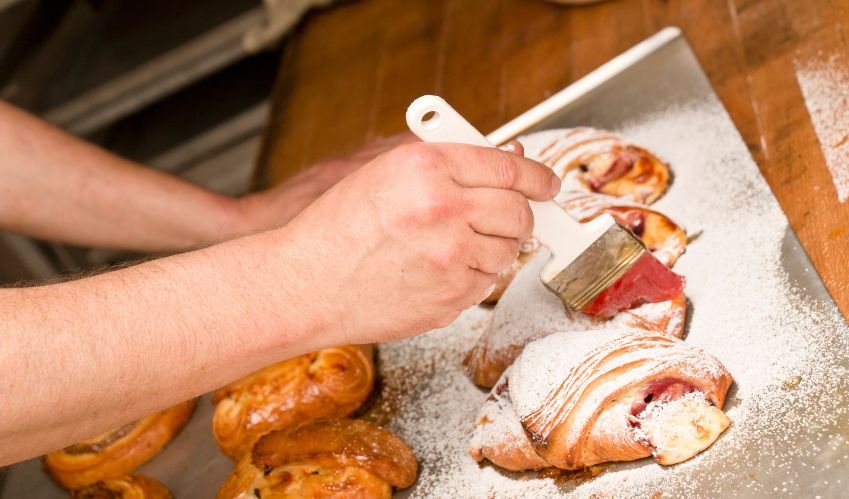
The dessert industry is changing – and this transformation is happening in ways that may not always be readily apparent to consumers. Advanced food-processing technology, new ingredient systems, and heightened quality control measures are all contributing to a shift that can have a major impact on dessert spreads, both in formulation and performance. In 2026, bakers are looking beyond simple sweetness and chocolate flavor – more and more, they want spreads that have predictable texture, stable performance, and trouble-free application.
Such attributes are especially important for products that are used in fillings, cake batters and icings, pastry creams, cookies, doughnuts, waffles, and a variety of other bakery applications. Modern Dessert Spreads for Bakers are being engineered with greater precision for use in production environments.
Greater Precision in Texture and Consistency
Texture is one of the most important qualities of any dessert spread. A product that is too thick may prove difficult to dispense or spread evenly, whereas one that is too fluid may not hold its shape or flow smoothly from a pastry tube.
Food technology enables manufacturers to exert far greater control over desirable consistencies, enabling them to fine-tune a formulation’s fat system, particle size, emulsification, and solids to achieve a specific effect. As a result, a spread may be designed to remain relatively stable and uniform during storage while becoming more easily applied under normal bakery conditions.
Reduced particle size – particularly in chocolate-based spreads – is another key advantage. By reducing the size of particulate matter in the formulation, manufacturers can improve a spread’s overall mouthfeel, enhance its smoothness and reduce the sandy or gritty quality that can be off-putting to some consumers. Proper processing also enables them to ensure that each batch of product has the same consistency, reducing the likelihood of variation between containers.
Improved Stability at Different Temperatures
During the production process, ingredients and products are frequently exposed to a range of temperatures, often without regard for the effect this can have on their physical properties. A given spread may be stored in a cold warehouse, used at room temperature, forced between warm layers of a cake, or heated again during the finishing stage – all of these factors can influence its performance.
Modern formulations are being developed with these potential changes in mind, with food scientists examining how a given spread will behave under different conditions. In some cases, this can enable a baker to achieve more predictable results when filling and decorating products, as the spread remains workable throughout the process. A similar benefit can be seen in terms of reduced separation or runniness in products that are exposed to moderate changes in temperature.
Careful temperature management during the production process also plays a role, with manufacturers seeking to preserve the integrity of the final product.
Emulsification Is Becoming More Effective
In many dessert spreads, emulsification plays a critical role in determining the final product’s quality and consistency. However, many ingredients that are commonly used together – particularly water and fat – are not fully compatible with one another.
This can lead to the formulation’s components separating at an inappropriate time, resulting in a heterogeneous mixture that lacks the smoothness and homogeneity that bakers desire. Modern emulsification technology enables manufacturers to produce a more uniform blend in which all of the product’s components – fat, water, cocoa particles, sugar, and any other included substances – are thoroughly mixed together. This is especially important in a commercial setting, where large batches of spread must remain consistent from one container to the next.
As a result, bakers can rely on more predictable performance when applying the spread to different products.
Improved Shelf Life Through Better Formulation
A spread’s ability to retain its quality, flavor, and consistency throughout its shelf life is another key concern for manufacturers. While obvious spoilage or contamination can usually be prevented through proper formulation and packaging, less-obvious changes – such as gradual textural changes or fat breakdown – can still have a detrimental effect on the final product.
Modern food technology is enabling manufacturers to extend a spread’s shelf life through careful formulation and processing. By managing such factors as water activity and ingredient interactions, they can slow the onset of undesirable changes, reducing the likelihood that a given batch of spread will exhibit unexpected differences in flavor, consistency, color, aroma, or other qualities.
In addition, improved packaging technology enables manufacturers to better shield their products from sources of deterioration, such as oxygen and moisture. For bakers, this means fewer unexpected changes when using an older product, ensuring that the spread maintains its intended characteristics for as long as possible.
Cleaner Ingredients and Evolving Consumer Preferences
Many consumers are growing more interested in what they eat and how it is made, asking for ingredients they can recognize and trust. This has created new demand for products with fewer artificial additives and alternative sweeteners, as well as formulations that are easier to understand or follow.
Such trends have in turn led manufacturers to pursue new technologies and alternative ingredients that can produce similar results without necessitating extensive formulation changes. This includes products such as plant-based spreads and alternative fat systems, as well as naturally derived colors and sweeteners.
However, ingredient substitutions are not always as simple as replacing one substance for another – each component has an effect on the spread’s overall characteristics and performance. Sweeteners influence not only flavor but also texture, freezing behavior, and moisture content, while fat plays a major role in determining a spread’s viscosity and melting characteristics. fast food technology enables manufacturers to analyze these changes and make the necessary adjustments to produce a spread that is both desirable to today’s consumers and capable of withstanding the rigors of commercial production.
More Specialized Products for Specific Bakery Needs
One of the biggest changes in modern Dessert Spreads for Bakers is the growing emphasis on application-specific performance. A given spread may perform very differently depending on what kind of product it is being used on – a cake filling has vastly different requirements than one meant for sandwich cookies or waffle batter.
This means that manufacturers can tailor the spread’s formulation to suit a particular application, adjusting factors such as viscosity or melting point to achieve the necessary results. In turn, this enables bakers to get more predictable performance from the spread while reducing the amount of trial-and-error needed to achieve the desired outcome.
Choconutri and the Changing Bakery Ingredient Market
As a growing number of bakeries and manufacturers seek to obtain high-quality spreads with desirable performance characteristics, more companies are beginning to make such products available. Choconutri provides dessert-oriented ingredients that have been developed specifically for use in bakery and food service applications, with our products available for purchase through the Choconutri website.
Automation and Changing Assumptions About Spread Performance
Modern bakeries are increasingly relying on automated processes to produce their products. From dispensing and depositing to filling and decorating, there are a number of steps that can be partially or completely performed by machines.
Such operations typically have stricter requirements for ingredients, particularly with regard to how easily they can be deposited or shaped. A slight change in viscosity can affect the dispensing pressure, leading to variations in weight or appearance from one product to the next.
As a result, manufacturers are seeking to formulate their spreads so that they can be used in both automated and manual applications, with consistent performance across both. This helps to ensure that large-scale operations will see minimal variation between products, particularly in settings where minor inconsistencies can add up over the course of thousands of units.
Quality and Food Safety in Modern Bakery Manufacturing
A wide range of modern innovations is helping to improve food safety and quality control in the wider bakery industry, with many of these trends having a direct impact on spread manufacturers. More advanced equipment and ingredients enable bakers and manufacturers to more closely regulate factors such as temperature, consistency, ingredient quality, and moisture level – all of which contribute to a more predictable, higher-quality final product.
By performing rigorous quality and safety testing at the manufacturing level, companies can ensure that only spreads of acceptable consistency and quality reach the hands of professional bakers. This is particularly important in the context of large-scale production, where even small variations can have a significant cumulative effect.
What Bakers Can Expect to See in 2026
The outlook for dessert spreads suggests a future in which such products will be increasingly specialized. As manufacturers seek to balance ingredient quality with functional performance, they are likely to continue developing spreads that are designed for specific purposes. This trend is being driven in part by the need for more reliable, repeatable results across large production batches, as well as by the push toward higher quality and greater consumer engagement.
Among the key developments to watch for are:
- Greater control over a spread’s viscosity and texture
- Improved performance at different temperatures
- Formulations that are more compatible with automated bakery equipment
- Heightened consumer interest in ingredient transparency
These developments will enable bakers to achieve greater consistency and flexibility in their production processes, with minimal compromise to overall quality or flavor.
Conclusion
From simple sweet formulations to technically advanced bakery ingredients: innovations in food technology are taking dessert spreads to new levels of performance and versatility. More efficient emulsification, refined particles, advanced fat systems, improved shelf life and temperature resistance, along with enhanced functionality, are creating new possibilities for bakers.
In 2026, Dessert Spreads for Bakers are being judged on their ability to consistently perform throughout the production process and meet the evolving needs of specialized, automated bakeries. The result is a broader range of ingredients for formulators and an opportunity for manufacturers to invest in research and development and bring out products with improved performance characteristics that address current trends and consumer demands.