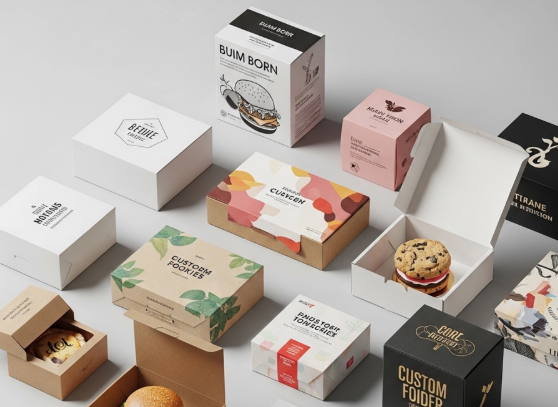
Custom food boxes are a significant economic factor for contemporary food industries struggling to handle daily operational costs. There is always a search by companies to find ways on how meals when being transferred without using a lot of money on protective packaging materials.
The selection of appropriate containment solutions can enable organizations to ensure high levels of quality and to keep their operational expenses low. Any restaurant owner is interested in striking a balance between durability and affordability. In contemporary supply chains, intelligent financial planning is required, particularly when prices of raw materials vary erratically throughout the global markets.
Material Selection Choices
The choice of the right raw materials to use in preparing the custom food boxes with logo is what will make or break a business in terms of working with a tight budget or other monetary limitations. The paperboard members (which are lightweight) have lower shipping weights when compared with heavy corrugated cardboard ones. Reduced weights mean direct proportionality to reduced freight costs in longer supply chains.
Before concluding bulk purchase agreements with manufacturers, purchasing agents need to ensure that the durability requirements are considered. Good quality materials will help avoid damage to the products en route to the customers, and this will rule out expensive customer refunds and replacement of the products.
Production Volume Scale
The amount of manufacturing is crucial in influencing unit prices of tailor-made food boxes. Bulk manufacturing is also possible, and suppliers can share the setup costs among thousands of individual units, leading to lower costs per item. The issue of high initial expenditure can be imminent among small businesses, which have difficulties ordering a small amount of goods to be delivered to local citizens.
Bulk ordering needs to be stored securely and requires a precise forecast of demand lest the inventory be spoiled or become outdated. Before undertaking huge manufacturing contracts, enterprises need to examine the records of their sales. Strategic volume planning will avoid high amounts of capital investing in unnecessary inventory items.
Shipping Weight Factors
The physical weight of custom food boxes that travel through the distribution networks is critical to transportation costs. The freight carriers charge delivery as a composite of the combined length and width of the shipment and the weight of the shipment. The bulky packaging options consume a lot of fuel, and freight charges are burned out quickly by a long delivery line.
The lightweight alternatives the engineers introduce can ensure structural integrity without excessive mass. Less weight is advantageous in logistics operations as there is a decrease in fuel consumption and delivery time of the vehicle. Each gram saved on packaging material will translate into savings in operations at year-end.
Storage Space Demands
Owing to the bulk and bulk shipment of custom food boxes, warehousing facilities require high overhead costs in terms of storing the food boxes. Flat folding designs are the most efficient in providing storage because they enable the facilities to store thousands of units in the smallest floor area possible. Containers are stacked up and occupy a lot of space, thus raising the cost of renting a facility and the manpower needed to handle them.
The highly sought-after design in inventory management revolves around the capacity to assemble in a limited time on a packing line to minimize labor idle time. Proper store plans save power in areas of facility footprints and decrease real estate overhead costs considerably. Warehouse management provides a predictable supply of stock without having to form bottlenecks with storage.
Design Complexity Levels
Complex printing and structure design of roll-to-be boxes and packaging of food items increase the production costs significantly. Plain single-colour printing processes save on ink usage and reduce printing set-up time in the factory. Multi-colour graphics and custom die-cut windows are complex and need specialized equipment and labor.
The visual benefits of marketing versus the increased cost of production due to elaborate design must be considered by brands. The beauty of minimalism frequently attracts the contemporary consumer while maintaining production costs incredibly low. The streamlined designs accelerate the assembly lines of production and reduce the rate of error in the factories.
Vendor Negotiation Tactics
Developing a long-term credit with the suppliers of custom food boxes ensures good pricing arrangements. Firms are using high volume purchase in terms of annual purchases to negotiate purchase volumes as well as payment terms of deferred purchase.
When comparing various bid prices by the vendor, it generates good competition and reduces costs that were not apparent in conventional pricing bids. The long-term contracts offer stability in price in case of unexpected costs of raw materials in the international market. Joint supplier relationships usually result in new cost-cutting concepts and joint logistical effectiveness. The management of suppliers is still a vital strategy towards keeping the price of products competitive.
Waste Reduction Practices
Reducing waste in the production of personalized food containers helps reduce the total cost of obtaining materials. Effective cutting designs make sure that a raw paper sheet is maximally utilized with minimum scraps left. Recycling of scrap material assists the suppliers in compensating for the costs of acquiring raw materials and passing on savings to buyers.
The production managers also pay a lot of attention to the yield rates of the factories to detect and remove the extraneous inefficiencies in the factory operations. Sustainability practices ensure there is less environmental impact and that financial performance is well-rooted in the supply chain. Effective utilization of resources is one of the fundamental aspects of the new financial management strategies.
Damage Prevention Rates
The custom boxes UK also have protective characteristics that help to mitigate spoilage of costly products as they are transported. Durable containers, used to absorb external forces, protect the food and avoid displacement during uneven delivery rides. Lower rates of damage save firms lots of money since they get rid of customer claims for compensation.
The only thing that can help avoid enormous financial damages from spoilt shipments is investing a little more in long-lasting containment solutions. The structural limits are also tested by quality assurance teams during regular tests to check the consistency of the level of protection. Creditworthy security keeps the brand in good standing and gives customers high satisfaction levels.
Conclusion
Custom food boxes continue to be a pertinent factor of overall operations spending and financial viability of food business. This is already achieved through careful planning when it comes to materials and amounts of manufacturing to ensure control of certain costs. Smart supply chain decisions will bring about changes in packaging, turning an unnecessary cost into a competitive edge.
Companies that consider weight and storage efficiency of transportation have long-term financial success. Compromise between quality and cost guarantees stable development of competitive markets. The best management practices ensure the maintenance of sustainability over the coming years.