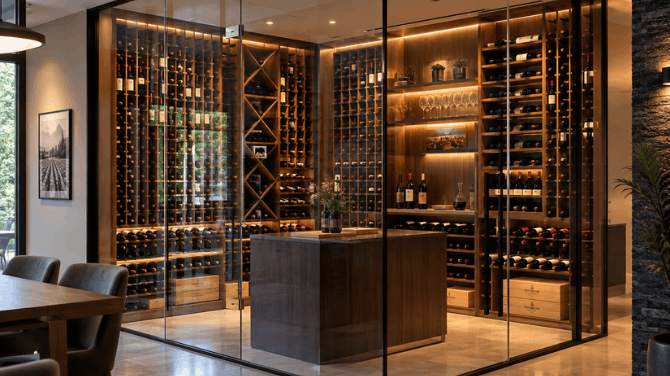
A wine room no longer has to be tucked away behind a solid door. More homeowners are using glass walls to make their collections part of the home’s design, whether that means displaying wine beside a dining area or creating a feature wall in the kitchen. A stunning glass display just adds so much charm to an entertainment space!
But it’s not just aesthetics. A custom glass wine cellar balances display and function well. So, if you’re considering a wine room, here’s why glass is a good choice.
A Custom Glass Wine Cellar Makes Your Collection Part of the Design
Traditional wine rooms often prioritize storage, with solid doors and enclosed shelving. Glass changes that approach. It lets your collection become a visible feature without closing off the room. For example:
- You could install a glass-enclosed wine room beside your dining area, where guests can admire the bottles without entering storage space.
- In a smaller home, a glass wine closet beneath the stairs can turn an awkward corner into something useful.
The result depends on your home’s layout. A frameless glass wine cellar in Houston, Texas, suits minimalist interiors, while black metal frames and warm wood accents can add character to a more traditional home.
Glass Wine Cellar Walls Need More Than Good Looks
Here’s the important part: glass doesn’t automatically create a suitable storage environment. Wine needs stable conditions, and a modern glass wine cellar must be designed to maintain them.
According to Wine Folly’s wine storage guide, a commonly recommended storage range is 55–59°F, with humidity around 55-75%. Your exact requirements may vary depending on your collection and storage goals.
Glass also introduces a practical challenge. Heat from the surroundings can affect the cellar. Temperature and humidity fluctuations may cause condensation. To avoid these problems, consider:
- Insulated glazing: Double-pane glass can reduce heat transfer compared with a single pane.
- UV protection: Choose suitable protective glazing and avoid direct sunlight where possible.
- Airtight doors: Proper seals prevent warm, humid air from entering.
- Dedicated cooling: Size the system for the enclosure, glass area, insulation, and local climate.
These details matter particularly in Texas, where hot summers and high humidity can make climate control more demanding.
Wine Racks Let You Personalize the Display
The glass is only one part of the room. Your racking determines how the collection looks, how many bottles you can store, and how easily you can reach them.
A modern wine room design might use slim metal racks to create a floating-bottle effect. Alternatively, wooden shelving can soften the look, while label-forward racks make it easier to identify bottles without pulling them out.
Think about how you actually collect wine before choosing a layout.
- If you mainly buy bottles for everyday meals, accessible shelving may matter more than elaborate displays.
- If you collect vintages for special occasions, you may want dedicated sections for different regions, years, or bottle sizes.
Plan for future growth, too. A room designed around 80 bottles may feel cramped when your collection reaches 200. Combining display shelving with higher-capacity storage helps in the long run. You don’t have to sacrifice practicality for appearance!
Luxury Wine Cellar Design Works Best With the Right Lighting
Lighting brings out the bottles’ color and gives the room depth. However, excessive light and heat are concerns for wine storage.
LED lighting is a practical choice because it produces relatively little heat compared with many traditional lighting options. Dimmers also let you adjust the atmosphere when entertaining.
For a clean, understated look, use discreet lighting along the custom wine racksor ceiling. Avoid directing bright lights at bottles for long periods, and consider UV protection if the enclosure receives daylight.
The goal is to illuminate the display without treating your wine collection like a shop window that’s switched on all day.
Choose a Contractor Before Finalizing the Design
A glass enclosure involves more than fitting panels into an opening. The glazing, door seals, cooling system, electrical work, and surrounding construction must work together.
An experienced wine cellar contractor in Austin or Dallas can coordinate these elements before installation begins. This is especially important if you’re converting an existing closet, renovating a kitchen, or building around a staircase.
For instance, Wine Cellars of Houston has a dedicated glass cellar service. They highlight considerations such as climate control, UV protection, insulated glass, and structural support. Also ask your contractor about:
- How the cooling system will handle the room’s heat load.
- How condensation and moisture will be managed.
- Whether the structure can support the glass and racking.
- How the system will be accessed for maintenance or wine cellar repair.
Getting these answers early can prevent expensive changes after the glass and shelving are installed.
A glass wine cellar can bring your collection into the heart of your home while giving the space a distinctive architectural feature. The key is balancing the visual appeal with proper storage conditions, thoughtful shelving, and reliable climate control.
Plan the technical details alongside the design, and you’ll have a wine room that looks beautiful and works well for years to come.
FAQS
- Will a glass wine room compromise the temperature and humidity control needed for aging wine?
Not if properly engineered. Modern glass wine enclosures combine insulated glass units (double- or triple-paned) with specialized climate-control systems to maintain stable temperature and humidity levels without condensation.
- Can glass wine walls be installed in small or unconventional spaces, like under a staircase?
Yes, glass partitions are fully customizable and ideal for maximizing compact or awkward layouts. They create an open, airy feel while transforming unused architectural spaces into striking focal points. For best results, talk to a professional glass wine cellar builder like Wine Cellars of Houston.
- How do you prevent UV rays from damaging the wine in a glass display?
High-end glass wine displays utilize laminated, UV-filtered glass or specialized tinting to block harmful ultraviolet light while maintaining crystal-clear visibility. This protects your bottles from premature aging.