Mobile Payment Market Overview
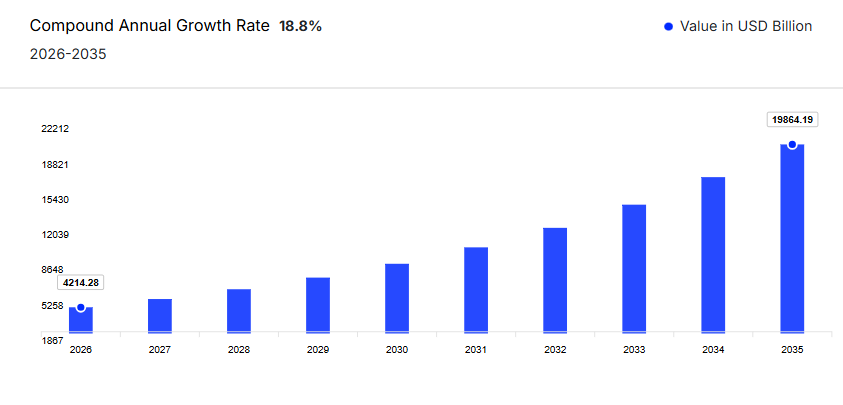
As per the market insights provided by Expert Market Research (EMR), the global mobile payment market reached a value of nearly USD 3,547.37 billion in 2025. Aided by the increasing adoption of digital payment solutions and the growing penetration of smartphones, the market is projected to grow at a CAGR of 18.80% between 2026 and 2035, reaching around USD 19,864.19 billion by 2035.
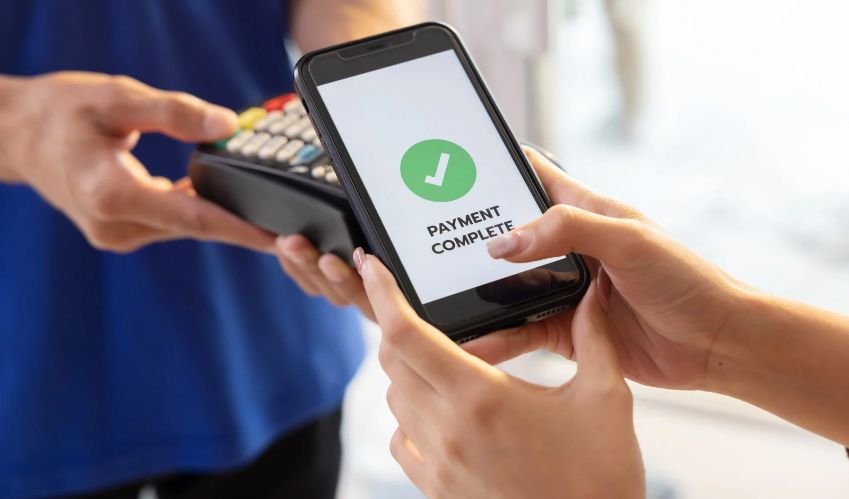
Mobile payments refer to financial transactions conducted through smartphones, tablets, and other mobile devices. These transactions include digital wallets, mobile banking applications, contactless payments, and payment services integrated into e-commerce platforms. The technology enables consumers to transfer money, pay bills, and purchase goods and services without relying on cash or traditional payment methods.
The increasing preference for convenient and secure payment experiences is supporting the expansion of the global mobile payment market. Consumers are increasingly using mobile applications for everyday transactions, while businesses are adopting digital payment systems to improve checkout experiences and simplify financial operations. The growing acceptance of cashless transactions across retail, hospitality, transportation, and online commerce is further contributing to market development.
Market Size and Share
The global mobile payment market is expanding as digital financial services become more accessible across developed and emerging economies. The widespread availability of affordable smartphones, improved internet connectivity, and the development of digital banking infrastructure have encouraged consumers to adopt mobile-based payment solutions. Government initiatives promoting financial inclusion and cashless transactions are also supporting the adoption of digital payment technologies.
Digital wallets and mobile banking applications account for important segments of the market, supported by their convenience and integration with everyday financial activities. Retail and e-commerce represent significant application areas, as consumers increasingly prefer quick payment methods for online purchases and in-store transactions. Meanwhile, small businesses are adopting mobile payment systems to accept digital payments without investing in expensive point-of-sale infrastructure.
The market share of different payment methods varies according to regional infrastructure, consumer preferences, regulatory frameworks, and the availability of financial services. Established markets benefit from mature digital payment ecosystems, while emerging economies offer considerable opportunities through increasing smartphone ownership and the adoption of mobile-first financial services.
Mobile Payment Market Key Trends
The growing adoption of digital wallets is one of the major trends shaping the mobile payment market. Consumers are using wallet applications to store payment credentials, transfer funds, manage loyalty programmes, and complete transactions across multiple platforms. Integration with banking services and retail applications is making these solutions more useful for everyday financial activities.
Another significant trend is the increasing popularity of contactless payments. Near-field communication (NFC) technology enables users to complete transactions by bringing compatible smartphones or wearable devices close to payment terminals. QR code-based payments are also gaining traction because they can be implemented using relatively simple infrastructure, making them suitable for small merchants and businesses operating in developing markets.
Furthermore, the integration of mobile payments with social commerce, transportation, food delivery, and subscription services is creating a more connected digital transaction environment. Businesses are increasingly prioritising seamless checkout experiences to reduce payment friction and improve customer retention.
Drivers of Industry Growth
The rising penetration of smartphones and internet services is a major factor driving the mobile payment market. As mobile devices become more accessible, consumers can use digital financial services without visiting physical bank branches or relying on traditional payment infrastructure. This is particularly important in regions where mobile technology provides a convenient route to financial inclusion.
The expansion of e-commerce is also contributing to market growth. Online retailers require convenient payment methods that allow customers to complete purchases quickly across devices. Mobile wallets and integrated payment applications help simplify checkout procedures and support repeat transactions.
Additionally, the growing preference for cashless transactions among consumers and businesses is strengthening demand. Mobile payments can improve transaction tracking, reduce cash-handling requirements, and provide merchants with faster access to digital payment records. Supportive government policies and investments in digital financial infrastructure are further encouraging adoption.
Mobile Payment Market Segmentation
The market based on the following segments:
Market Breakup by Transaction Mode
- Mobile Web Payments
- Near Field Communication
- SMS Direct Carrier Billing
- Others
Market Breakup by End User
- Personal
- Business
Market Breakup by Purchase Type
- Airtime Transfer and Top Ups
- Money Transfers and Bill Payments
- Merchandise and Coupons
- Travel and Ticketing
- Others
Market Breakup by Application
- Media and Entertainment
- Energy and Utilities
- Healthcare
- Retail
- Hospitality and Transportation
- Others
Market Breakup by Region
- North America
- Europe
- Asia Pacific
- Latin America
- Middle East and Africa
Competitive Landscape
| S. No. | Company Name |
|---|---|
| 1 | American Express Company |
| 2 | Apple, Inc. |
| 3 | Google LLC |
| 4 | JPMorgan Chase & Co. |
| 5 | Mastercard Incorporated |
| 6 | Paytm (One 97 Communications Limited) |
| 7 | PayPal Holdings, Inc. |
| 8 | Others |
Technology and Advancements
Technological advancements are improving the functionality, security, and accessibility of mobile payment systems. Artificial intelligence is being used to identify unusual transaction patterns, assess potential fraud, and support real-time monitoring. These capabilities can help payment providers detect suspicious activities and improve transaction security.
Tokenisation is another important development, replacing sensitive payment information with unique digital tokens during transactions. Biometric authentication, including fingerprint and facial recognition, also helps strengthen identity verification while making payments more convenient for users.
Meanwhile, blockchain-based payment solutions and real-time payment infrastructure are creating opportunities for faster transfers and improved transaction transparency. However, their adoption varies across markets and applications. Continued improvements in encryption, authentication, and payment interoperability are expected to support the development of more efficient mobile payment ecosystems.
Mobile Payment Industry Analysis
The mobile payment industry includes digital wallet providers, banks, payment processors, fintech companies, telecommunications operators, and technology platforms. Competition is influenced by transaction security, ease of use, merchant acceptance, transaction costs, and the ability to integrate payment services with other digital applications.
Financial institutions are partnering with technology providers to improve mobile banking and payment experiences, while fintech companies are introducing specialised solutions for consumers and merchants. Retailers are also integrating mobile payments into loyalty programmes and customer management systems to encourage repeat purchases.
Regional market dynamics differ considerably. Markets with advanced banking infrastructure often benefit from established wallet services and contactless payment networks. In contrast, developing economies can experience rapid adoption through mobile-first payment platforms, QR code systems, and initiatives designed to expand access to formal financial services.
Challenges and Opportunities
Despite strong growth prospects, the mobile payment market faces challenges related to cybersecurity, data privacy, regulatory compliance, and digital accessibility. Fraudulent transactions, phishing attacks, account takeovers, and identity theft can undermine consumer confidence. Payment providers must continuously improve security systems while maintaining convenient user experiences.
Differences in payment infrastructure and regulatory requirements can also complicate international transactions. In addition, consumers without reliable internet access or sufficient digital literacy may face difficulties adopting mobile payment services.
However, these challenges create opportunities for innovation. Providers can expand into underserved markets, develop affordable merchant payment solutions, and strengthen fraud prevention capabilities. Improved interoperability between payment platforms and the introduction of more accessible digital financial services can further support market penetration.
Mobile Payment Market Forecast 2026-2035
The global mobile payment market is expected to maintain strong growth between 2026 and 2035, supported by digital commerce, smartphone adoption, and continued advancements in payment technology. The increasing integration of mobile payments into retail, banking, transportation, and business applications is likely to expand their role in everyday financial transactions.
As competition intensifies, providers are expected to focus on security, transaction speed, interoperability, and customer experience. Investments in artificial intelligence, biometric authentication, and real-time payment infrastructure may further improve service capabilities. With businesses and consumers increasingly embracing digital transactions, the market is well positioned for continued expansion over the forecast period.
Media Contact:
Company Name: Claight Corporation
Contact Person: George buttler, Corporate Sales Specialist – U.S.A.
Email: sales@expertmarketresearch.com
Toll Free Number: +1-415-325-5166 | +44-702-402-5790
Address: 30 North Gould Street, Sheridan, WY 82801, USA
Website: https://www.expertmarketresearch.com