Market Overview
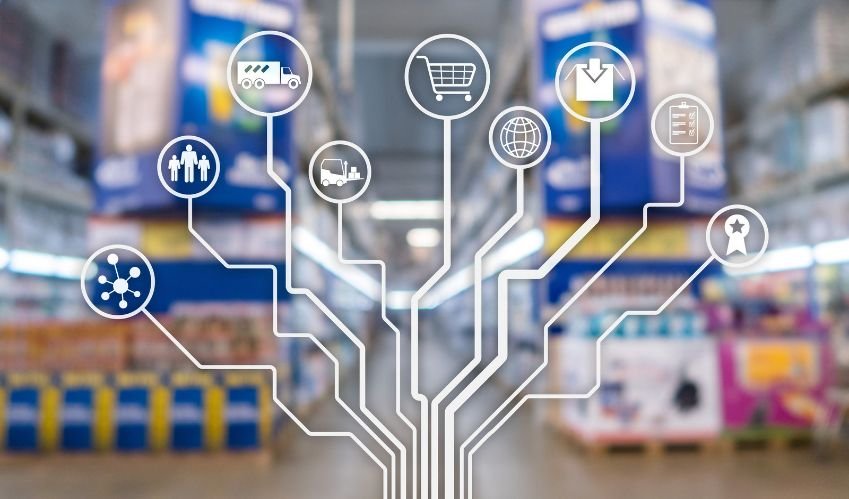
Growth stage omnichannel retail tech startups France are gaining attention as retailers increasingly integrate their physical stores, e-commerce platforms, mobile applications, and digital customer engagement channels. These startups develop solutions that help retailers synchronise inventory, manage orders, personalise shopping experiences, analyse customer behaviour, and improve operational efficiency. As businesses seek to deliver consistent experiences across online and offline channels, demand for integrated retail technology is creating opportunities for innovative companies to scale their operations.
As per tle latest analysis report by Expert Market Research, the France retail market attained a value of USD 780.05 billion in 2025 and is projected to expand at a CAGR of 3.10% through 2035, reaching USD 1,058.54 billion by 2035. The market encompasses diverse product categories, including food and grocery, apparel, household products, furniture, and electronics, distributed through supermarkets, convenience stores, specialty online stores, and platforms. This broad retail ecosystem creates potential opportunities for technology startups offering specialised omnichannel solutions. However, the expansion of the overall retail market should not be interpreted as an equivalent growth rate for the retail technology startup segment.
Understanding Growth-Stage Omnichannel Retail Tech Startups
Growth-stage omnichannel retail tech startups are companies that have moved beyond initial product development and market validation and are focused on expanding their customer base, revenue, partnerships, and geographic reach. These businesses typically have established technology products and commercial relationships, enabling them to address the requirements of mid-sized retailers and larger enterprise customers.
Omnichannel retail technology connects different stages of the shopping journey. A customer might discover a product on social media, purchase it through a retailer’s website, collect it from a physical store, and subsequently request a return through another channel. Integrated technology allows retailers to coordinate inventory, orders, payments, customer information, and fulfilment across these interactions.
For growth-stage startups, the opportunity extends beyond developing standalone applications. Retailers often require solutions that integrate with existing point-of-sale systems, enterprise resource planning software, customer relationship management platforms, and e-commerce infrastructure. Startups capable of simplifying these integrations can help retailers improve visibility across their operations while reducing the complexity of managing multiple sales channels.
Key Product Segments Creating Technology Opportunities
France’s retail market covers several product categories with different inventory, fulfilment, and customer engagement requirements. These differences create opportunities for omnichannel retail technology providers to develop specialised solutions.
| Product segment | Omnichannel retail technology opportunities |
|---|---|
| Food, Beverage, and Grocery | Real-time inventory, click-and-collect, demand forecasting |
| Personal and Household Care | Loyalty platforms, repeat-purchase recommendations, customer analytics |
| Apparel, Footwear, and Accessories | Cross-channel returns, personalised shopping, stock synchronisation |
| Furniture and Home Décor | Product visualisation, delivery scheduling, integrated order management |
| Electronic and Household Appliances | Product comparison, inventory visibility, after-sales support |
| Others | Digital payments, customer engagement, unified commerce solutions |
Food, Beverage, and Grocery
Food, beverage, and grocery retailers manage frequent purchases, perishable inventory, changing demand, and large product assortments. Omnichannel solutions can support real-time inventory visibility, online grocery ordering, click-and-collect services, delivery coordination, and demand forecasting.
Growth-stage startups can help retailers connect store inventory with digital ordering systems and improve the accuracy of product availability information. AI-powered forecasting and inventory management can also help businesses plan replenishment and reduce avoidable waste.
Apparel, Footwear, and Accessories
Fashion retailers must manage changing collections, seasonal demand, multiple sizes, colours, and product returns. Customers may research products online before purchasing in-store or order online and return items through physical locations.
Retail technology startups can provide unified inventory management, personalised recommendations, virtual shopping assistance, and cross-channel returns management. These capabilities are particularly relevant to businesses seeking to deliver consistent experiences across e-commerce platforms, mobile applications, and physical stores.
Personal and Household Care
Retailers selling personal care and household products can use omnichannel technology to strengthen customer engagement and encourage repeat purchases. Customer relationship management platforms, loyalty applications, personalised promotions, and automated replenishment recommendations can support these objectives.
Startups can also help retailers connect online marketing campaigns with purchasing behaviour across channels, allowing businesses to develop more relevant customer communication strategies.
Furniture and Home Décor
Furniture and home décor retailers often handle bulky products, longer purchasing decisions, product configuration, and delivery scheduling. Customers may research products online before visiting showrooms or purchase online after examining products in person.
Omnichannel technology can connect showroom displays, online catalogues, inventory information, delivery systems, and customer support. Startups offering visualisation tools, product configuration software, and integrated order management can help retailers simplify the customer journey.
Electronic and Household Appliances
Electronics and household appliance retailers must provide accurate product specifications, stock information, delivery options, and after-sales support. Technology platforms can connect online product discovery with store availability, order fulfilment, warranty information, and customer service.
Growth-stage startups can develop product comparison tools, AI-enabled customer assistance, inventory synchronisation, and delivery coordination systems. Such solutions can help retailers improve purchasing convenience while managing complex product assortments.
Distribution Channels and Omnichannel Integration
France’s retail distribution landscape includes supermarkets and hypermarkets, convenience stores, specialty stores, online channels, and other formats. Each channel presents different opportunities for technology companies seeking to connect customer interactions and retail operations.
Supermarkets and hypermarkets: Large retail chains require integrated inventory systems, demand forecasting, loyalty platforms, and efficient click-and-collect operations. Startups can help connect store-level stock information with central ordering and fulfilment systems.
Convenience stores: Smaller-format retailers can benefit from simplified inventory management, digital payment integration, local delivery coordination, and mobile-based loyalty solutions. Affordable, easy-to-deploy technology can be especially relevant for businesses with limited technical resources.
Specialty stores: Retailers focused on fashion, beauty, electronics, and other specialist categories often require tailored customer experiences. Personalisation tools, unified customer profiles, appointment booking, and product availability systems can support these requirements.
Online retail: E-commerce platforms generate opportunities for product recommendation engines, customer analytics, fraud prevention, order management, and integration with physical retail networks. Growth-stage startups can help retailers connect online transactions with store operations and delivery services.
| Distribution channel | Key technology requirements |
|---|---|
| Supermarkets and Hypermarkets | Inventory synchronisation, loyalty systems, click-and-collect |
| Convenience Stores | Digital payments, local delivery, simplified inventory tools |
| Specialty Stores | Personalisation, unified customer profiles, product availability |
| Online | E-commerce integration, recommendation engines, order management |
| Others | Cross-channel customer engagement and fulfilment integration |
For technology startups, the key opportunity is not simply to improve individual channels but to ensure that information and services remain consistent across the entire customer journey.
Regional Opportunities Across France
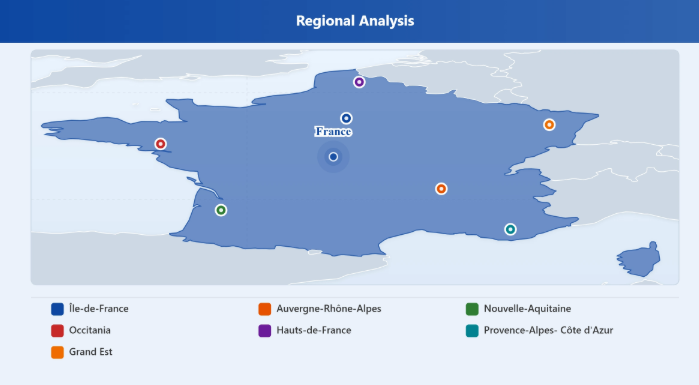
France’s regional retail landscape provides a range of potential markets for omnichannel technology providers. The regional segmentation of the France retail market includes Île-de-France, Auvergne-Rhône-Alpes, Nouvelle-Aquitaine, Occitania, Hauts-de-France, Provence-Alpes-Côte d’Azur, and Grand Est.
Île-de-France provides an important business environment for companies seeking relationships with retailers, corporate technology buyers, and digital commerce partners. Paris also offers access to a broad startup and investment ecosystem.
Auvergne-Rhône-Alpes and Hauts-de-France provide additional markets for retail technology adoption across different retail and business environments. Nouvelle-Aquitaine, Occitania, Provence-Alpes-Côte d’Azur, and Grand Est also represent potential areas for solutions addressing regional retail operations, inventory visibility, customer engagement, and fulfilment.
These regions should be treated as part of the market’s geographic opportunity landscape rather than ranked by retail technology adoption or growth. Establishing regional leaders would require supporting data on technology spending, startup activity, retail sales, and customer adoption.
Competitive Landscape and Retail Partnerships
France’s retail market includes established businesses such as Carrefour S.A., ELO S.A. (Auchan Retail International S.A.), Hermès International S.A., LVMH Moët Hennessy Louis Vuitton SE, including Sephora, Amazon.com Inc., E.Leclerc, Decathlon SAS, Casino Guichard Perrachon S.A., and ALDI.
These businesses operate across different retail formats and product categories, making them relevant examples of the types of organisations that may require omnichannel technology. Their operations illustrate the potential need for connected inventory systems, digital customer engagement, e-commerce integration, and coordinated fulfilment.
However, these established retailers should not be classified as growth-stage retail technology startups. Instead, they form part of the broader competitive and customer environment in which technology startups operate.
Growth-stage companies can differentiate themselves by providing specialised software, flexible integrations, industry-specific functionality, and measurable operational improvements. Potential partnership opportunities may include integrating with existing commerce platforms, supporting retailers’ digital transformation projects, or providing technology for specific processes such as inventory management, customer loyalty, and returns.
The ability to demonstrate reliability, data security, scalability, and a clear return on investment can influence whether a startup progresses from smaller retail customers to larger enterprise contracts.
Business Models and Growth Strategies
Growth-stage omnichannel retail tech startups in France can generate revenue through several business models. Software-as-a-Service subscriptions provide recurring revenue, while usage-based pricing allows customers to pay according to transaction volumes or platform activity. Enterprise licensing and implementation services can generate additional revenue from larger retailers with complex technology requirements.
To scale effectively, startups need to balance product innovation with implementation efficiency and customer retention. Building integrations with established e-commerce, payment, inventory, and logistics platforms can reduce adoption barriers and improve product compatibility.
Strategic partnerships can also help startups access new customers. Collaborations with retail consultants, system integrators, logistics providers, and commerce technology vendors can create distribution opportunities without requiring every customer relationship to be developed independently.
International expansion represents another potential growth strategy. Companies with adaptable software can explore other European markets, although expansion requires attention to local languages, consumer preferences, payment methods, tax requirements, and data protection obligations.
Challenges Facing Growth-Stage Retail Technology Startups
Despite the opportunities, growth-stage startups face several challenges when selling technology to established retailers.
Legacy systems can make integration expensive and time-consuming, particularly when retailers use different software across stores, warehouses, and online channels. Startups must ensure that new solutions can operate reliably without disrupting existing business processes.
Competition is another concern. Established enterprise software providers and international commerce platforms may offer extensive functionality, established customer relationships, and substantial implementation resources. Smaller companies therefore need to demonstrate a clear advantage through specialisation, flexibility, usability, or measurable business outcomes.
Data privacy and cybersecurity are also important. Omnichannel platforms may process customer information, transaction records, and commercially sensitive operational data. Startups must implement appropriate security measures and comply with applicable regulations, including the General Data Protection Regulation.
Finally, retailers increasingly expect technology investments to deliver measurable results. Improved inventory accuracy, reduced fulfilment costs, higher conversion rates, better customer retention, and more efficient operations can help demonstrate the value of a startup’s offering.
Future Outlook
The outlook for growth stage omnichannel retail tech startups France will depend on retailers’ continued efforts to connect digital and physical commerce. The country’s broad retail market provides a diverse customer environment spanning grocery, fashion, personal care, furniture, electronics, and other product categories.
The France retail market is projected to increase from USD 780.05 billion in 2025 to USD 1,058.54 billion by 2035, at a CAGR of 3.10%. This expansion provides broader commercial context for retail technology adoption, although the growth rate of individual technology businesses will depend on factors such as customer acquisition, product differentiation, recurring revenue, and competition.
Startups that offer effective inventory visibility, integrated order management, personalised customer experiences, and reliable connections between retail systems may be well positioned to address evolving business requirements. Those that combine specialised industry knowledge with scalable software, strong partnerships, and demonstrable commercial benefits can strengthen their position in the French retail ecosystem.
Overall, France offers potential opportunities for growth-stage omnichannel retail tech startups that help retailers coordinate their operations and provide more consistent shopping experiences. Long-term success will depend on solving practical retail challenges, supporting complex integrations, and delivering measurable value as businesses expand across channels and markets.