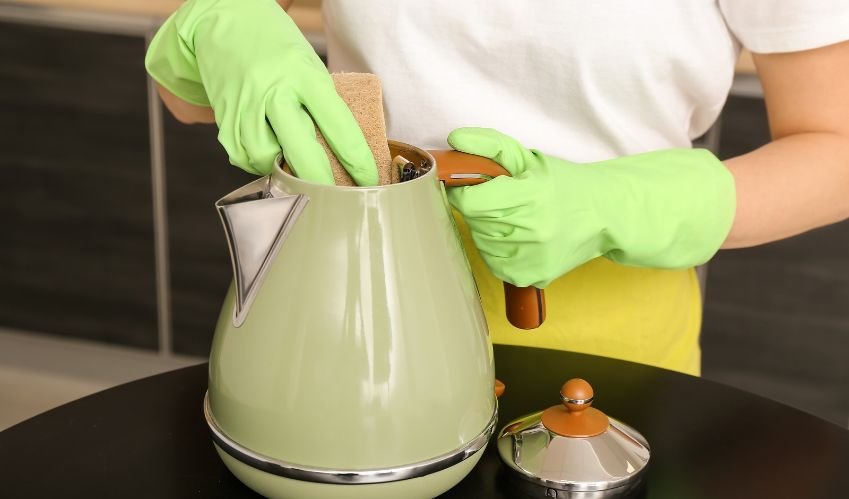
An electric kettle is convenient for boiling water, making tea and coffee, and preparing quick meals. However, regular use can lead to limescale buildup, unpleasant smells, milk residue, and stains inside the kettle. If you do not clean it properly, these deposits can affect the taste of your water and reduce the kettle’s efficiency.
The good news is that you can clean an electric kettle at home using simple ingredients such as white vinegar, baking soda, citric acid, or lemon juice. The right method depends on what you want to remove, whether it is mineral deposits, food residue, or stains on the exterior.
In this guide, you will learn how to clean an electric kettle inside and outside, how to remove limescale without vinegar, and how to clean it after boiling milk or preparing Maggi.
What You Need to Clean an Electric Kettle
Before you begin, collect the following household items:
- White vinegar or citric acid for removing limescale
- Baking soda for mild cleaning and odour removal
- Fresh water for rinsing
- A soft sponge or microfiber cloth
- A soft-bristled brush for accessible areas
- A clean, dry towel
Important: Always unplug the kettle before cleaning its exterior. Never immerse the kettle, electrical base, plug, or power cord in water. Check the manufacturer’s instructions before using any cleaning solution.
How to Clean an Electric Kettle Inside: Step-by-Step Guide
The inside of an electric kettle often develops white or grey deposits because minerals in hard water accumulate during repeated boiling. These deposits are known as limescale.
Follow these steps to clean the interior safely.
Step 1: Unplug and Cool the Kettle
Switch off the kettle, unplug it, and allow it to cool completely. Empty any remaining water and remove the lid if your model allows it.
Never pour a cleaning solution into a hot kettle because sudden temperature changes can damage some materials or cause splashing.
Step 2: Check for Limescale and Residue
Look inside the kettle for white patches, rough deposits, discoloration, or an unpleasant smell. If you notice mineral buildup, use white vinegar or citric acid.
For light residue or odours, baking soda may be helpful. Avoid using abrasive scrubbers that can damage the interior surface.
Step 3: Choose a Suitable Cleaning Method
Use one of the methods explained below, depending on the type of dirt or deposit.
Step 4: Rinse the Kettle Thoroughly
After cleaning, empty the solution and rinse the interior several times with fresh water.
If necessary, boil a fresh batch of clean water and discard it. Make sure no cleaning solution or smell remains before using the kettle again.
How to Clean Electric Kettle with Vinegar
White vinegar is a popular household option for removing mineral deposits from electric kettles. Its acidity helps dissolve limescale caused by hard water.
Follow these steps:
- Make sure the kettle is unplugged and completely cool.
- Mix equal parts white vinegar and water, using enough liquid to cover the affected deposits without exceeding the maximum fill line.
- Pour the mixture into the kettle.
- If the manufacturer’s instructions permit it, heat the solution to a boil. Otherwise, use it as a soaking solution.
- Switch off and unplug the kettle, then leave the solution for approximately 15–20 minutes. Heavy deposits may require a longer soak.
- Empty the kettle carefully and wipe away any loosened deposits with a soft sponge.
- Rinse several times with clean water.
- Boil fresh water and discard it if any vinegar smell remains.
Tip: If the kettle still has visible limescale, repeat the process rather than scraping the deposits with a metal object.
How to Clean Electric Kettle with Baking Soda
Baking soda can help with mild residue and unpleasant odours. However, it is generally less effective than vinegar or citric acid for dissolving heavy limescale.
Here is how to use baking soda:
- Add fresh water to the kettle, staying below the maximum fill line.
- Add approximately one teaspoon of baking soda per litre of water.
- Stir gently if possible, without damaging the kettle’s interior.
- Heat the solution only if the manufacturer’s instructions permit it. Otherwise, leave it to soak.
- Allow the kettle to cool completely before emptying it.
- Wipe the inside gently with a soft sponge.
- Rinse thoroughly until no baking soda residue remains.
Avoid using too much baking soda, as it can leave a residue. For thick mineral deposits, choose vinegar or citric acid instead.
How to Clean Electric Kettle Without Vinegar
If you dislike the smell of vinegar or do not have it at home, you can clean your kettle using citric acid or lemon juice.
Method 1: Use Citric Acid
Citric acid is particularly useful for removing limescale without leaving a strong vinegar smell.
- Fill the kettle with water to cover the affected areas.
- Add citric acid according to the product label. For a typical household kettle, approximately one to two tablespoons per litre may be sufficient, but follow the manufacturer’s and product instructions.
- Heat the solution only if the kettle’s instructions allow it.
- Let the solution sit for around 15–20 minutes, or as directed by the product.
- Empty the kettle and rinse it several times.
- Boil fresh water and discard it before normal use if any residue or taste remains.
Method 2: Use Lemon Juice
Lemon juice can help with light mineral deposits and unpleasant smells.
- Fill the kettle with water.
- Add a few tablespoons of fresh lemon juice.
- Heat the solution only if permitted by the manufacturer.
- Allow it to sit for approximately 15–20 minutes.
- Empty the kettle, wipe gently, and rinse thoroughly.
Lemon juice may be less effective against heavy limescale than a suitable citric acid solution.
Clean Electric Kettle with Citric Acid
Citric acid is a practical alternative to vinegar for removing white mineral deposits. It is especially useful in areas with hard water.
Follow this process:
- Unplug the kettle and allow it to cool.
- Fill it with enough water to cover the limescale.
- Add citric acid according to the product instructions.
- If approved for your kettle, heat the solution; otherwise, let it soak.
- Leave it for the recommended period, usually around 15–20 minutes for light buildup.
- Empty the solution and use a soft sponge to remove loosened deposits.
- Rinse thoroughly with fresh water.
- Boil and discard one batch of fresh water if needed.
Do not mix citric acid with vinegar, bleach, or other cleaning chemicals. Use one cleaning method at a time.
How to Clean Electric Kettle Outside
The exterior of an electric kettle can develop fingerprints, watermarks, grease, and dust. Cleaning it properly helps maintain its appearance.
- Switch off and unplug the kettle.
- Allow it to cool completely.
- Dampen a soft microfiber cloth with water and wring out the excess.
- Wipe the outer surface gently.
- For greasy marks, use a small amount of mild dish soap on the cloth, if suitable for the kettle’s finish.
- Wipe again with a clean, slightly damp cloth to remove soap.
- Dry the exterior thoroughly before reconnecting the kettle.
Safety note: Never run water directly over the kettle or immerse its electrical components. For stainless steel, glass, or coated finishes, use cleaning products recommended by the manufacturer.
Clean Electric Kettle After Making Maggi
Preparing Maggi or other instant noodles directly inside an electric kettle market can leave food particles, oily residue, and strong smells. However, many electric kettles are designed only for boiling water, so check your model’s instructions before using it to cook food.
If food residue is already inside the kettle, follow these steps:
- Switch off and unplug the kettle, then let it cool completely.
- Empty any remaining liquid carefully.
- Remove loose food particles without scratching the heating element or interior.
- Add warm water and a small amount of mild dish soap only if the manufacturer permits it.
- Gently clean accessible surfaces with a soft sponge or brush.
- Empty the soapy water and rinse thoroughly until all food and soap residue is gone.
- If an unpleasant smell remains, use a manufacturer-approved cleaning method, such as a suitable citric acid solution for mineral deposits.
- Let the kettle dry completely before using it again.
Do not use a metal scraper or pour water into the electrical base. If food flavour has entered inaccessible components or the kettle smells burnt, stop using it until it has been checked.
How to Clean Electric Kettle After Boiling Milk
Milk can leave a sticky film, protein residue, and an unpleasant smell inside a kettle. It may also burn onto the heating element, making cleaning more difficult.
Follow these steps:
- Turn off and unplug the kettle immediately, then let it cool.
- Empty the milk carefully without touching hot surfaces.
- Remove loose residue with a soft sponge if it is accessible.
- If the manufacturer permits it, use warm water and a small amount of mild dish soap to loosen the milk residue.
- Gently clean the interior without scraping or damaging the heating element.
- Rinse repeatedly with clean water until all milk and soap residue is removed.
- Dry the kettle and inspect it for any remaining residue or burnt deposits.
If the milk has burned onto the heating element or the kettle is not designed for milk, do not continue heating cleaning solutions in it. Follow the manufacturer’s cleaning instructions or seek servicing if the residue cannot be removed safely.
Prevention tip: Avoid boiling milk in a standard electric kettle unless the manufacturer specifically states that it is designed for this purpose.
How to Clean an Electric Kettle for the First Time
Cleaning a new electric kettle before its first use helps remove dust or residue left from manufacturing and packaging.
Here is what to do:
- Remove all packaging and check the manufacturer’s instructions.
- Wipe the exterior with a clean, damp cloth.
- Fill the kettle with fresh water up to the maximum fill line.
- Boil the water according to the operating instructions.
- Discard the boiled water.
- Repeat the process once if recommended by the manufacturer or if you notice any unusual taste or smell.
- Allow the kettle to cool and inspect it before normal use.
Do not use vinegar, baking soda, or other cleaning agents on a new kettle unless the manufacturer recommends them.
How to Clean an Electric Kettle at Home: Which Method Is Best?
Choose the cleaning method based on the problem you are trying to solve.
| Cleaning problem | Recommended method |
|---|---|
| White limescale deposits | White vinegar or citric acid |
| Mild unpleasant odour | Baking soda or lemon juice, if suitable |
| Limescale without vinegar | Citric acid |
| Fingerprints on the exterior | Damp microfiber cloth |
| Greasy exterior marks | Mild dish soap on a cloth |
| Milk residue | Warm water and mild dish soap, if permitted |
| Food residue after Maggi | Gentle manual cleaning with an approved method |
| New kettle before first use | Fresh water rinse and boil |
Remember that limescale and food residue are different problems. Acidic cleaners are useful for mineral deposits, while food residue usually needs gentle manual cleaning.
How Often Should You Clean an Electric Kettle?
How frequently you should clean your kettle depends on how often you use it and the mineral content of your water.
- After every use: Empty leftover water when practical and allow the kettle to dry.
- Weekly: Wipe the exterior and check the interior for residue or deposits.
- Every 2–4 weeks: Inspect for limescale and descale when needed, especially if you use hard water.
- Immediately after a spill: Clean milk or food residue as soon as the kettle has cooled safely.
You may need to descale more frequently if white deposits form quickly. Follow your kettle manufacturer’s recommended cleaning schedule.
Common Mistakes to Avoid When Cleaning an Electric Kettle
Avoid these mistakes to protect your appliance and keep the water safe to drink.
- Submerging the kettle in water: This can damage electrical components.
- Using steel wool or metal scrapers: These may scratch the interior or damage the heating element.
- Mixing cleaning chemicals: Never combine vinegar or citric acid with bleach or other cleaning products.
- Leaving cleaning solution inside: Always empty and rinse the kettle thoroughly.
- Cleaning while the kettle is hot: Allow it to cool completely before handling or wiping the interior.
- Using too much baking soda: Excess powder may leave residue and is not necessary for routine cleaning.
- Ignoring milk or food residue: These deposits can cause persistent smells and may become harder to remove.
- Boiling food in an unsuitable kettle: Use a kettle for cooking only when the manufacturer explicitly permits it.
Frequently Asked Questions
1. What is the easiest way to clean an electric kettle?
For ordinary limescale, use a suitable white vinegar or citric acid solution, following your kettle manufacturer’s instructions. Allow it to soak as directed, then empty and rinse thoroughly.
2. How do I clean an electric kettle without vinegar?
Use citric acid or, for light deposits, lemon juice. Follow the product instructions, avoid damaging the kettle’s interior, and rinse thoroughly after cleaning.
3. Can I use baking soda to clean an electric kettle?
Yes, baking soda can help with mild residue and odours when used appropriately. However, vinegar or citric acid is usually more effective for removing mineral scale.
4. How do I remove white deposits from an electric kettle?
White deposits are usually limescale from hard water. Use a suitable descaling solution, such as white vinegar or citric acid, if approved by the manufacturer.
5. How do I remove the smell of milk from an electric kettle?
If the kettle is designed for milk or the manufacturer permits cleaning with mild dish soap, gently wash accessible surfaces and rinse repeatedly. Do not heat milk in a standard water-only kettle or use an unapproved cleaning method.
6. Can I clean the outside of an electric kettle with water?
Yes. Use a slightly damp cloth and dry the exterior thoroughly. Do not pour water directly over the kettle or allow moisture to enter the electrical base, plug, or power cord.
7. Is it safe to boil vinegar in an electric kettle?
It depends on the kettle manufacturer’s instructions. If vinegar-based descaling is permitted, use the recommended concentration and method, ensure adequate ventilation, and rinse the kettle thoroughly afterwards.
8. How long should I leave vinegar in an electric kettle?
For light limescale, around 15–20 minutes is often sufficient. Follow the manufacturer’s instructions, and avoid leaving the solution longer than recommended.
9. Can I use lemon juice instead of vinegar?
Yes, lemon juice may help with light mineral deposits and unpleasant odours. For heavy limescale, citric acid or a suitable manufacturer-approved descaler may be more effective.
10. Should I clean my electric kettle every day?
You do not usually need to descale it daily. Empty leftover water and keep the exterior clean, then descale when mineral deposits appear or according to the manufacturer’s maintenance schedule.
Conclusion
Cleaning an electric kettle is simple when you choose the right method for the problem. White vinegar and citric acid are useful for limescale, baking soda may help with mild odours, and a damp microfiber cloth is suitable for cleaning the exterior.
For milk or food residue, use gentle manual cleaning only if the kettle’s instructions permit it. Always unplug the appliance before cleaning, protect its electrical components, and rinse thoroughly before boiling water again.
With regular inspection and proper cleaning, you can keep your electric kettle clean, maintain its performance, and enjoy better-tasting water for everyday use.
